
How to check a Pennsylvania home improvement contractor
What Pennsylvania's Home Improvement Consumer Protection Act requires: registration, insurance, what the contract must say, deposits and your right to cancel.
Draft for client review. Not legal advice; rules change, so check the linked sources before you rely on them.
Pennsylvania’s Home Improvement Consumer Protection Act (Act 132 of 2008) sets the rules for anyone who remodels, repairs or renovates a home for pay. It tells you who must register, what the contract must say, how much they can take up front and how you can back out. You can check most of it yourself before you sign.
Who has to register
The Act says no one may hold themselves out as a contractor without first registering with the Bureau of Consumer Protection in the Attorney General’s office. It covers a contractor whose home improvement work came to $5,000 or more in the previous tax year. The work it covers is any job over $500 on a private residence: repairs, remodeling, renovation, roofs, siding, flooring, painting, doors and windows, central heating and air conditioning. “Private residence” means a single-family home, a building with no more than two units, or a single unit such as a condo.
The Act leaves out building a new home and converting a commercial building into housing.
To register, a contractor must carry at least $50,000 of personal injury insurance and $50,000 of property damage insurance. The registration renews every two years.
How to check a registration
The Act requires the contractor to put its registration number on all advertisements and on all contracts, estimates and proposals. If a flyer, a website listing or an estimate shows no number, ask for it.
To confirm the number is real, call the Attorney General’s contractor line at 1-888-520-6680. Ask for proof of insurance too, and check that the amounts match what the contract states.
What the contract has to say
A home improvement contract isn’t valid or enforceable against you unless it meets every point in Section 7(a). It must:
- be written, legible and show the contractor’s registration number
- be signed by you and by the contractor or its salesperson
- hold the entire agreement, with copies of all required notices attached
- show the date of the transaction
- give the contractor’s name, address and phone number (a P.O. box alone doesn’t count as an address)
- give approximate start and completion dates
- describe the work, materials and specifications, and say that none of it changes without a written change order signed by both of you
- state the total sales price, or a time-and-materials arrangement with a written estimate and a cap no more than 10% above it
- list the down payment and any special-order materials separately
- name every subcontractor known at signing, with addresses and phone numbers
- commit to keeping the $50,000 / $50,000 insurance and state the current coverage
- give the Attorney General’s toll-free number
- include a notice of your right to cancel
You get a completed copy at signing, free. If the contract has an arbitration clause, it must sit on its own page in capitals and 12-point bold type, signed by both parties.
You can void any of these clauses if the contract has one: holding the contractor harmless, waiving building codes, confession of judgment, waiving a jury trial, making you pay the contractor’s attorney fees, or waiving the Act itself.
Your three days to cancel
You can cancel within three business days of signing, wherever you signed. The contract has to tell you so.
Deposits and payments
On a job priced over $5,000, the contractor can’t take a deposit of more than one-third of the price, plus the cost of special-order materials named in the contract. (An amendment in 2011 raised that threshold from $1,000 to $5,000.)
The Act also makes these prohibited acts:
- taking any payment before the contract is signed
- abandoning the job or failing to do the work without justification
- changing the specifications without a dated, signed change order that shows the price
- refusing a refund within 10 days of a certified-mail request when no substantial work has been done 45 days or more past the start date
- bait advertising
Any violation counts as a violation of the state’s consumer protection law. Home improvement fraud is a third-degree felony when the amount exceeds $2,000 and a first-degree misdemeanor below that. The grade goes up one step when the victim is 60 or older.
Extra checks in Philadelphia
Philadelphia adds its own Contractor License for construction, demolition and repair work. L&I’s code of conduct requires licensed contractors to display the licence number on advertisements, stationery, places of business, job sites, proposals and vehicles that show the business name. The licence needs at least $500,000 of general liability insurance per occurrence.
A business that only does home improvement on existing one- or two-family homes, with no electrical, plumbing or fire suppression work, can pull permits as a registered Pennsylvania home improvement contractor instead. Electrical and plumbing work in the city still needs separately licensed trades.
Homes built before 1978
If your home was built before 1978, the EPA’s Renovation, Repair and Painting rule applies to anyone paid to disturb painted surfaces. That includes general contractors, plumbers and electricians. The firm must be EPA-certified, even a sole proprietor, and an uncertified firm can’t advertise or do that work. Pennsylvania doesn’t run its own program, so EPA certifies firms here, and a certification lasts five years. Small jobs, six square feet or less of paint per room inside or 20 square feet or less outside, are exempt.
Hold us to the same list
Run this checklist on One Worth too. Before you sign, ask us for our registration number and certificate of insurance, and read our contract against the 13 points above. Our quote is a fixed price for the whole project. One person is your contact from the first visit to the final walkthrough. Every trade runs on one schedule, in-house or through our subcontractors, and we handle the permits. While the work goes on, we send regular progress updates with photos, so you see what was done and what comes next.
Sources
- Home Improvement Consumer Protection Act, Act 132 of 2008, 73 P.S. § 517.1 et seq. (Pennsylvania General Assembly)palegis.us
- Act 52 of 2011, amending the Home Improvement Consumer Protection Act (Pennsylvania General Assembly)palegis.us
- Shapiro Administration reminds Pennsylvanians of contractor scams following major summer storms (PA Insurance Department, 2026)pa.gov
- Special registrations (business.pa.gov)business.pa.gov
- Get a contractor license (City of Philadelphia)phila.gov
- Contractor Code of Conduct information sheet (L&I)phila.gov
- Submit as a PA home improvement contractor to get construction permits (City of Philadelphia)phila.gov
- Lead Renovation, Repair and Painting Program (EPA)epa.gov
- Renovation, Repair and Painting Program: Contractors (EPA)epa.gov
- Renovation, Repair and Painting Program: Firm certification (EPA)epa.gov
Keep reading
More guides before you build
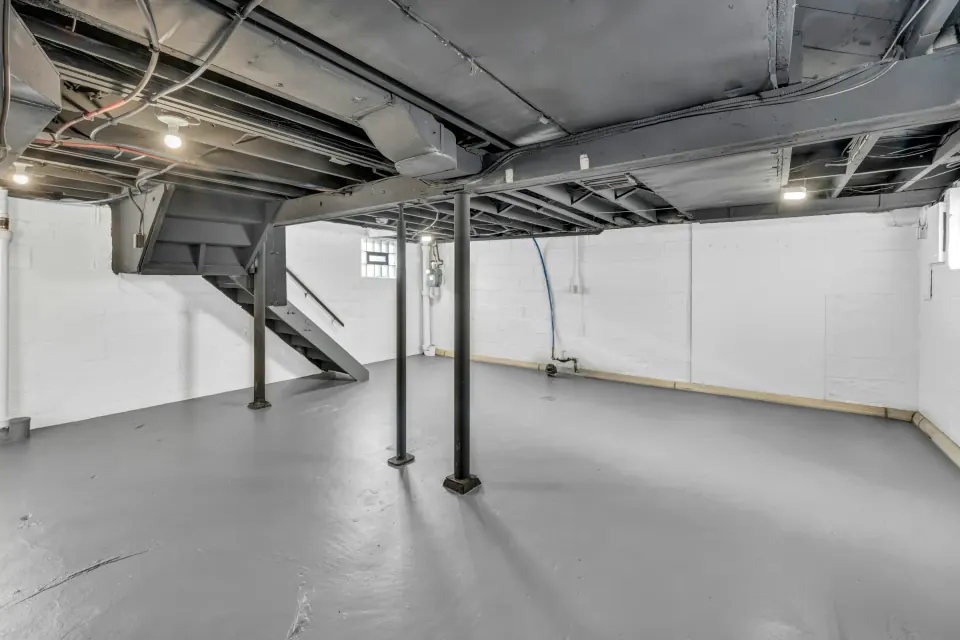
Finishing a basement in a Philadelphia rowhouse
Party walls, water, egress, ceiling height, radon and permits: what to check before you finish the basement of a Philadelphia rowhouse.

Getting a renovation permit in Philadelphia
How L&I permits work for a Philadelphia renovation: zoning first, building or EZ permits, trade permits, review times, historic homes and inspections.
How to check a New Jersey contractor's 13VH registration
Checking a New Jersey home improvement contractor: the 13VH number, insurance, what the contract must include, your three days to cancel, and permits.

Start a project
Ready to start your project?
A free estimate visit, a fixed-price quote and one point of contact from start to finish.