
Electrical services
We handle panels, circuits, lighting and code upgrades, on their own or as part of a remodel or rehab, in-house or through our licensed subcontractors. Permits, inspection and the walls around the work stay with us.
Electrical
Wired to the code in force
Panels, circuits, lighting and code upgrades, in-house or through our licensed subcontractors.
You get a clear fixed-price quote before work starts and one point of contact from start to finish. We pull the permits, run every trade in-house or through our subcontractors, and send regular progress updates with photos, so you know the status of the work and the next steps.
What's included
08 items- Panel and service upgrades
- New circuits for kitchens, baths and basements
- GFCI and AFCI protection
- Lighting inside and out
- Smoke and carbon monoxide alarms
- Wiring for appliances and equipment
- Rewiring during rehabs
- Permits and inspections
One fixed price for all of it, agreed before work starts.
How electrical work runs here
Electrical work sits inside almost every job we do. A new kitchen needs circuits for the counters and appliances, a finished basement needs outlets and lights, and a rehab often needs the house rewired from the panel out. We also take electrical work on its own: a panel upgrade, new circuits, lighting, or bringing an older house up to today’s code.
The rules change at the city line and again at the state line, so here is how each part of our area handles it.
Philadelphia
In Philadelphia, the City requires a licensed electrical contractor to perform all electrical work, under an electrical permit from the Department of Licenses and Inspections (L&I). The owner or their agent hires a licensed electrical inspection agency to inspect the work. Where a building permit is also needed, L&I issues that first. From July 1, 2026, an electrical permit that includes an EV charger needs an EVITP-certified contractor.
From July 1, 2026, Philadelphia applications follow the 2021 International Codes with the 2020 National Electrical Code as the referenced standard. L&I’s own training slides on the change point out a few things that affect homes:
- GFCI protection now reaches receptacles up to 250 volts.
- In basements, GFCI protection now covers all basement areas, finished or not.
- The new emergency disconnect requirement doesn’t apply to rowhouses or townhouses up to three stories.
New Jersey
New Jersey’s construction rules allow electrical work only by licensed electricians, with one exception: a single-family homeowner working on their own house. The permit application must carry the seal and signature of the licensed electrical contractor. New Jersey adopted the 2023 National Electrical Code with its 2024 model codes in August 2026, so a job in South Jersey can follow a newer edition than the same job in Philadelphia.
Pennsylvania suburbs
Pennsylvania has no statewide licence for most construction contractors. Some of the state’s 2,562 municipalities set their own licensing or certification rules, so the requirements in one township can differ from the next. We check the municipality’s rules at the estimate visit, and the permit comes from the township, the borough or the third-party agency it uses.
What the code asks for in a house
The 2021 residential code, as Pennsylvania adopted it, sets the protection each room needs:
- GFCI in bathrooms, on kitchen countertop receptacles, within 6 feet of a sink, in laundry areas and on all basement receptacles.
- AFCI on circuits serving kitchens, family rooms, dining and living rooms, bedrooms, closets, hallways and laundry areas.
- Modified circuits. When branch-circuit wiring is modified, replaced or extended, that circuit needs AFCI protection. Short extensions of 6 feet or less that add no outlets are exempt.
- Alarms. When alterations that need a permit go beyond plumbing and mechanical work, the house needs smoke alarms where a new house would have them. Pennsylvania lets one- and two-family houses under alteration use battery-operated alarms instead of interconnected ones.
What to prepare
- What’s prompting the work: breakers that trip, a new appliance, an addition, an older panel.
- The panel’s location and a photo of its label, if you can get one.
- A list of what you plan to run: EV charger, heat pump, kitchen appliances, studio equipment.
- For a commercial space, the equipment list and the landlord’s electrical rules.
What changes cost and time
We price electrical work after we’ve seen the panel and the runs. These move the number most:
- The panel. Whether the existing service can take the new load or has to be upgraded.
- Access. Open walls in a remodel make wiring simple; finished plaster in an occupied house takes more care and more patching.
- Code upgrades. Modifying circuits brings in AFCI protection, and permitted alterations bring in alarms.
- Inspection timing. In Philadelphia, the inspection agency’s schedule; elsewhere, the township’s.
How we run it
You get a fixed-price quote and one point of contact. We handle the permit, run the work in-house or through our licensed subcontractors, arrange the inspection and close the walls after it passes. You get photo updates with the status and the next step, and we stand behind the work we complete.
Sources
- City of Philadelphia: Get an electrical permitphila.gov
- Philadelphia L&I Code Bulletin B-2501: Implementation of the 2021 International Codesphila.gov
- Philadelphia L&I: 2021 code adoption, electrical webinar slidesphila.gov
- 2021 International Residential Code as adopted in Pennsylvania, Chapter 39: Power and Lighting Distribution (UpCodes)up.codes
- 2021 International Residential Code as adopted in Pennsylvania, Chapter 3: Building Planning (UpCodes)up.codes
- N.J.A.C. 5:23-2: Uniform Construction Code, administration (NJ Department of Community Affairs)nj.gov
- New Jersey Uniform Construction Code: current model codesnj.gov
- Pennsylvania Department of Labor & Industry: UCC contractor licensingpa.gov
Trades on this job
The trades we bring in
All on one schedule, in-house or through our subcontractors, under one point of contact.
Electrical
Panels, circuits, outlets and lighting.
The City requires a licensed electrical contractor for all electrical work, under an electrical permit, and the owner or their agent hires a licensed electrical inspection agency to inspect it. We run electrical work in-house or through our licensed subcontractors and handle the permit.
Yes. We cover Philadelphia, South Jersey and nearby Pennsylvania. In New Jersey, the permit application has to carry the seal and signature of a New Jersey licensed electrical contractor.
No. Electrical is one of our core services on its own, and it's also part of every kitchen, bathroom, basement and rehab we run.
Related services
Often part of the same job
The trades overlap, so these often run on the same schedule and the same fixed price.
 /01
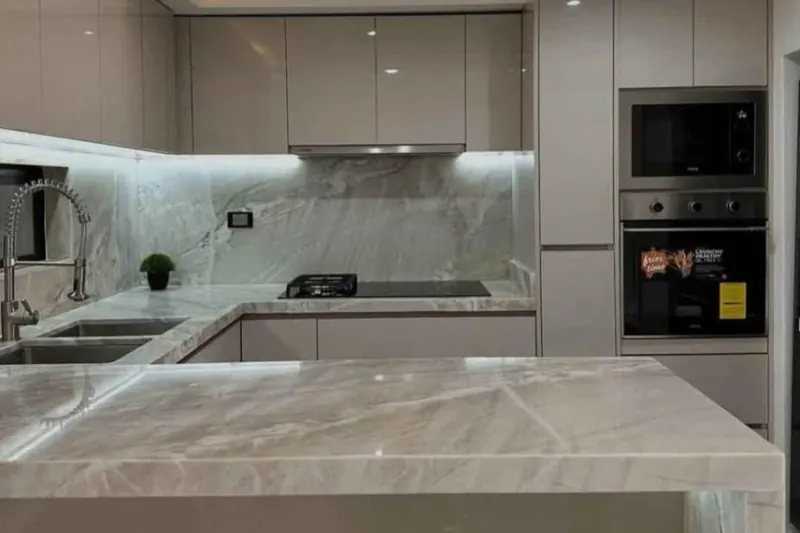
Kitchen remodeling
Layout, cabinetry, plumbing, electrical and finishes by one team, on one fixed price.
- Plumbing
- Electrical
- Finishes
 /03
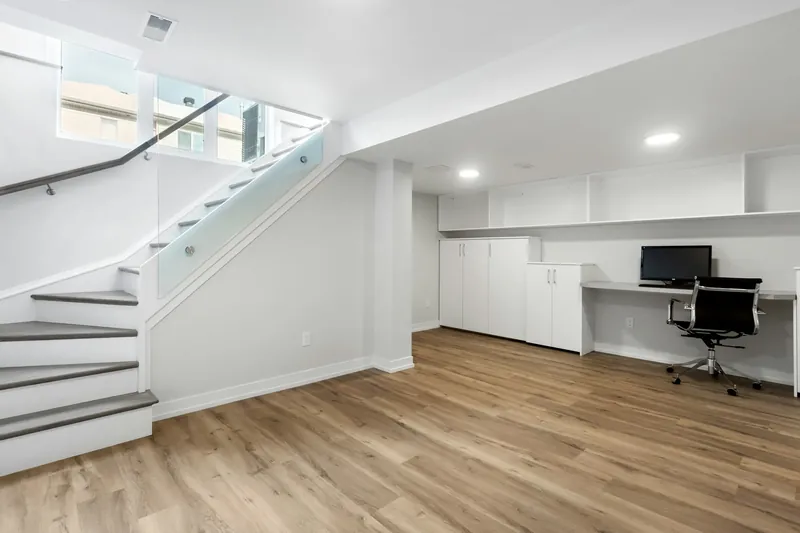
Basement finishing
Framing, egress, moisture control and structural work coordinated with an engineer.
- Structural
- Electrical
- Finishes
 /04
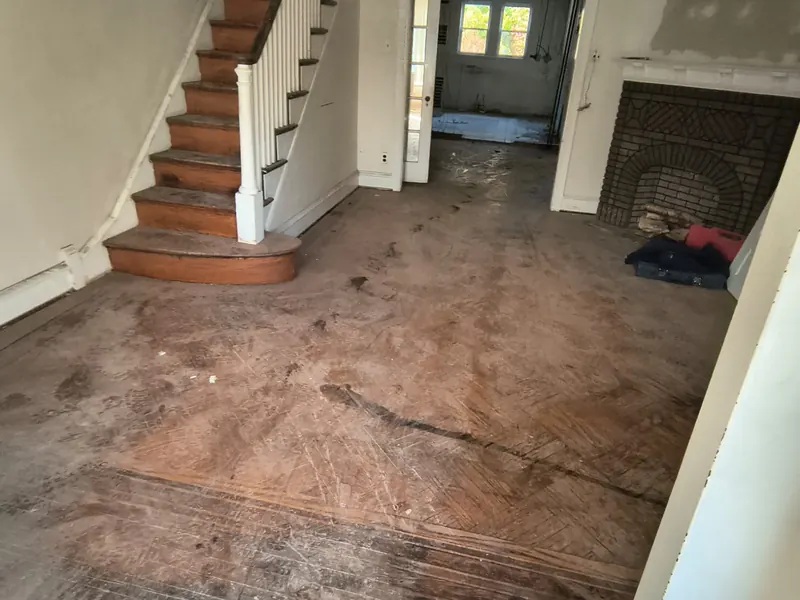
Full property rehabs
Whole-property rehabs for owners and investors, finished fast so the property can be rented or sold.
- Structural
- HVAC
- Plumbing
- Electrical

Start a project
Ready to start your project?
A free estimate visit, a fixed-price quote and one point of contact from start to finish.