
Heating and cooling (HVAC)
We install and replace ducted and ductless heating and cooling systems, from the outdoor unit to every room, on their own or inside a remodel, rehab or fit-out. Permits, the trades around the work and the inspections stay with us.
HVAC
From the condenser to every room
Ducted and ductless systems, from the condenser to every room.
You get a clear fixed-price quote before work starts and one point of contact from start to finish. We pull the permits, run every trade in-house or through our subcontractors, and send regular progress updates with photos, so you know the status of the work and the next steps.
What's included
08 items- Ducted heating and cooling systems
- Ductless systems
- Heat pumps and condensers
- Ductwork design and installation
- Kitchen and bathroom exhaust
- Ventilation for basements and fit-outs
- Carbon monoxide alarms with fuel-fired work
- Permits and inspections
One fixed price for all of it, agreed before work starts.
Our work
From our HVAC jobs
Ductwork and units in a commercial fit-out and a residential rehab, photographed as the work went in.
See all 12 photosHVACSpiral duct mains and diffusers across an open commercial ceiling
HVACNew air handler with an insulated supply plenum
HVACUnits, mains and drops hung before the walls are finished
HVACInsulated supply trunk with register boots, before drywall
HVACRound diffusers on the supply runs of an open-ceiling space
HVACSupply trunk down a gutted rowhouse floor
How HVAC work runs here
Heating and cooling touches more of a building than it seems. A new system needs a place for the outdoor unit, a path for the refrigerant lines, room for ducts or wall units, a circuit from the panel and, for gas equipment, a flue. In a rowhouse, with party walls on both sides and joists running between them, finding those paths is most of the design work.
We handle ducted and ductless systems from the condenser to every room. We take HVAC on its own, and we plan it into every basement, rehab and fit-out where the space needs heating or cooling.
Philadelphia
The City requires a licensed contractor for all mechanical work, under a mechanical permit from the Department of Licenses and Inspections (L&I), and sheet-metal work has to be done by a registered sheet-metal technician. L&I inspects mechanical work in stages, from rough to testing to final, and from July 1, 2026 Philadelphia applications follow the 2021 International Mechanical Code and the 2021 residential code.
The 2021 residential code made one change that matters for heating work. When a permitted repair or alteration involves a fuel-fired system, the house now needs carbon monoxide alarms; under the 2018 code, mechanical work was exempt. L&I calls this out in its own summary of the changes.
Refrigerant
Any technician who maintains, services, repairs or disposes of equipment that could release refrigerant must hold an EPA Section 608 certification. EPA certifies technicians by type: small appliances, high-pressure equipment, low-pressure equipment, or universal, and the credentials don’t expire. Whoever handles the refrigerant on your job has to hold the type that matches the equipment.
New Jersey and the Pennsylvania suburbs
New Jersey’s construction rules allow HVAC work only by licensed HVACR contractors, except for a single-family homeowner working on their own house, and the permit application carries the licensed contractor’s seal and signature. New Jersey treats replacing a furnace, water heater or air conditioner with one of like capacity as minor work: the work can start once the construction official has notice, with the permit application following within five business days.
Pennsylvania has no statewide licence for most construction contractors, though some municipalities set their own rules. Under the state’s Uniform Construction Code, adding or relocating mechanical equipment is not an ordinary repair, so it needs a permit from the township, the borough or its third-party agency.
Exhaust and ventilation
Kitchens and bathrooms have their own exhaust rules in the 2021 residential code. A kitchen exhaust needs at least 100 cfm intermittent or 25 cfm continuous; a bathroom needs 50 cfm intermittent or 20 cfm continuous, exhausted directly outdoors. We size and duct these with the rest of the system so the fans do their job and pass inspection.
What to prepare
- What’s wrong now: rooms that don’t heat or cool, high bills, an old system, no cooling at all.
- The age and type of the current system, with a photo of its label if you can.
- Where an outdoor unit could sit: the rear yard, the roof, a side passage.
- For a fit-out, the equipment and occupancy that the system has to serve.
What changes cost and time
We price HVAC after we’ve seen the building. These decide it:
- Ducted or ductless. Existing ductwork that can be reused keeps the job smaller. In a house with no ducts, a ductless system avoids new duct runs.
- The routes. Party walls, finished ceilings and historic interiors limit where lines and ducts can go.
- Electrical capacity. A heat pump or new condenser may need a new circuit or a panel upgrade, which our electrical work covers.
- Fuel. Gas equipment brings venting and, with permitted work, carbon monoxide alarms.
How we run it
You get a fixed-price quote and one point of contact. We pull the permits, coordinate the HVAC with the electrical and finishes in-house or through our licensed subcontractors, and schedule the inspections. You get photo updates with the status and the next step, and we stand behind the work we complete.
Sources
- City of Philadelphia: Get a mechanical permitphila.gov
- Philadelphia L&I: Inspections by permit typephila.gov
- Philadelphia L&I Code Bulletin B-2501: Implementation of the 2021 International Codesphila.gov
- Philadelphia L&I: 2021 IRC significant changes FAQphila.gov
- 2021 International Residential Code as adopted in Pennsylvania, Chapter 3: Building Planning (UpCodes)up.codes
- 2021 International Residential Code as adopted in Pennsylvania, Chapter 15: Exhaust Systems (UpCodes)up.codes
- Philadelphia City Planning Commission: Philadelphia Rowhouse Manualphila.gov
- EPA: Section 608 technician certification requirementsepa.gov
- N.J.A.C. 5:23-2: Uniform Construction Code, administration (NJ Department of Community Affairs)nj.gov
- Pennsylvania Department of Labor & Industry: UCC contractor licensingpa.gov
- PA Code § 403.62: Permit requirements and exemptionspacodeandbulletin.gov
Trades on this job
The trades we bring in
All on one schedule, in-house or through our subcontractors, under one point of contact.
HVAC
Heating, cooling, ducts and exhaust.
The City requires a licensed contractor for all mechanical work, under a mechanical permit, and sheet-metal work has to be done by a registered sheet-metal technician. We run HVAC in-house or through our licensed subcontractors and pull the permit.
Yes. We cover Philadelphia, South Jersey and nearby Pennsylvania. New Jersey requires HVAC work to be done by a licensed HVACR contractor, and treats replacing a furnace, water heater or air conditioner with one of like capacity as minor work, which can start on notice before the permit is issued.
Yes. We plan the HVAC with the rest of the job, so the ducts, the electrical and the finishes go in on one schedule under one point of contact.
Related services
Often part of the same job
The trades overlap, so these often run on the same schedule and the same fixed price.
 /06
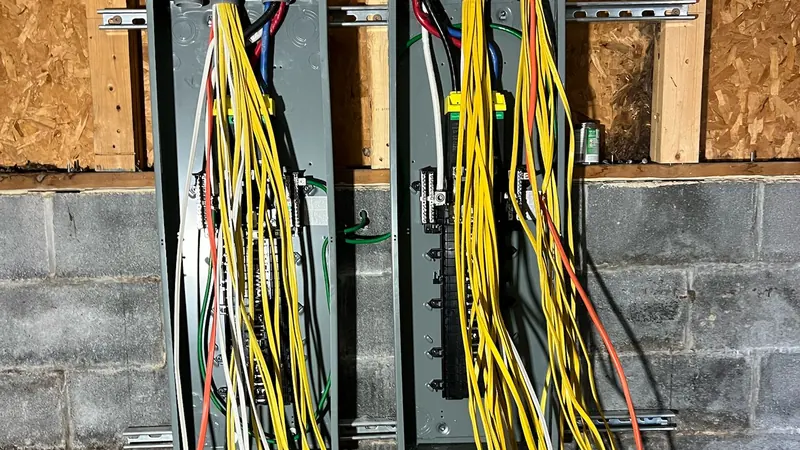
Electrical services
Panels, circuits, lighting and code upgrades, in-house or through our licensed subcontractors.
- Electrical
 /03
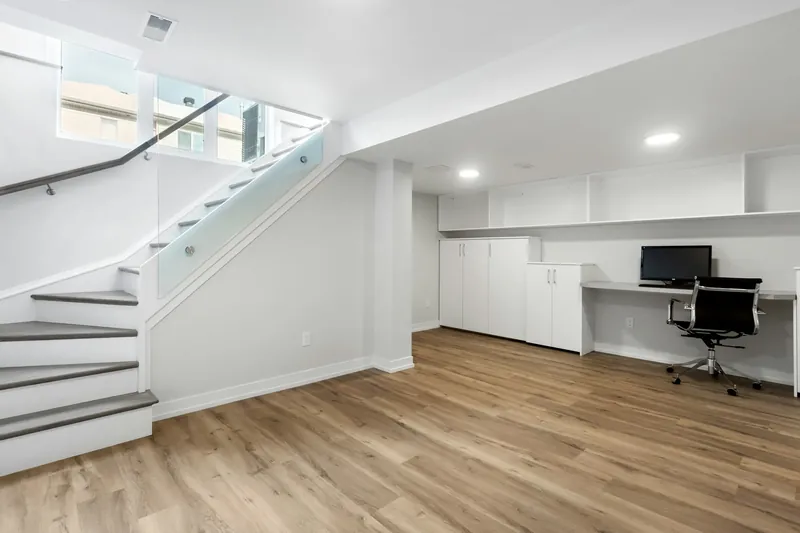
Basement finishing
Framing, egress, moisture control and structural work coordinated with an engineer.
- Structural
- Electrical
- Finishes
 /05
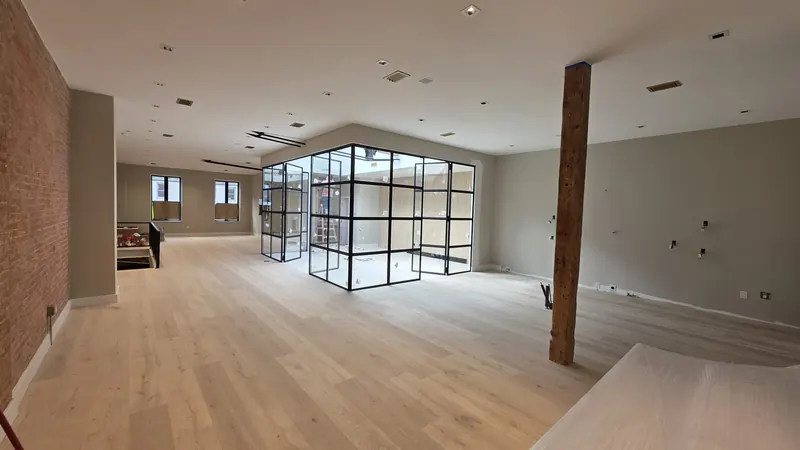
Retail and studio fit-outs
Build-outs completed on schedule, to code and to lender or landlord requirements.
- Permits
- Structural
- HVAC
- Plumbing

Start a project
Ready to start your project?
A free estimate visit, a fixed-price quote and one point of contact from start to finish.